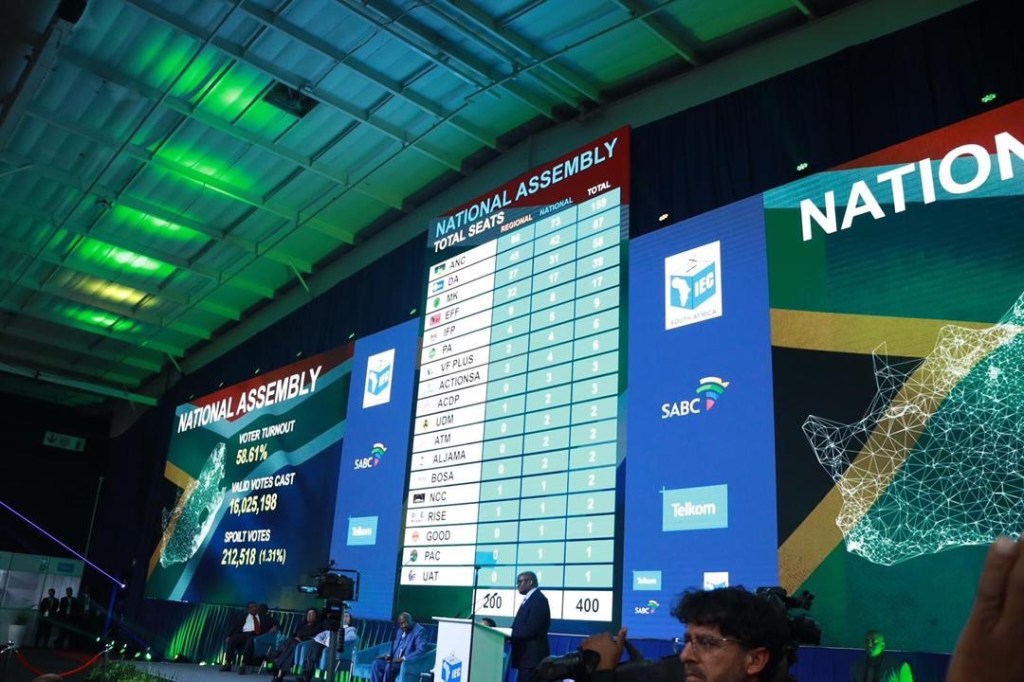
On the 29th of May 2024, South Africans headed to the polls after 30 years of democracy. The South African constituency was set to declare its views on the current state of the nation and their future aspirations.
After a long counting period, filled with numerous political scuffles around a plethora of issues, the results were brought before the people. The ANC had fallen from 57% in 2019 to 40% in 2024. THE MIGHTY ANC HATH FALLEN.

While this was true, it had not fallen far enough to concede the throne to opposition. Therefore, came in ‘The Age of the Coalition’.
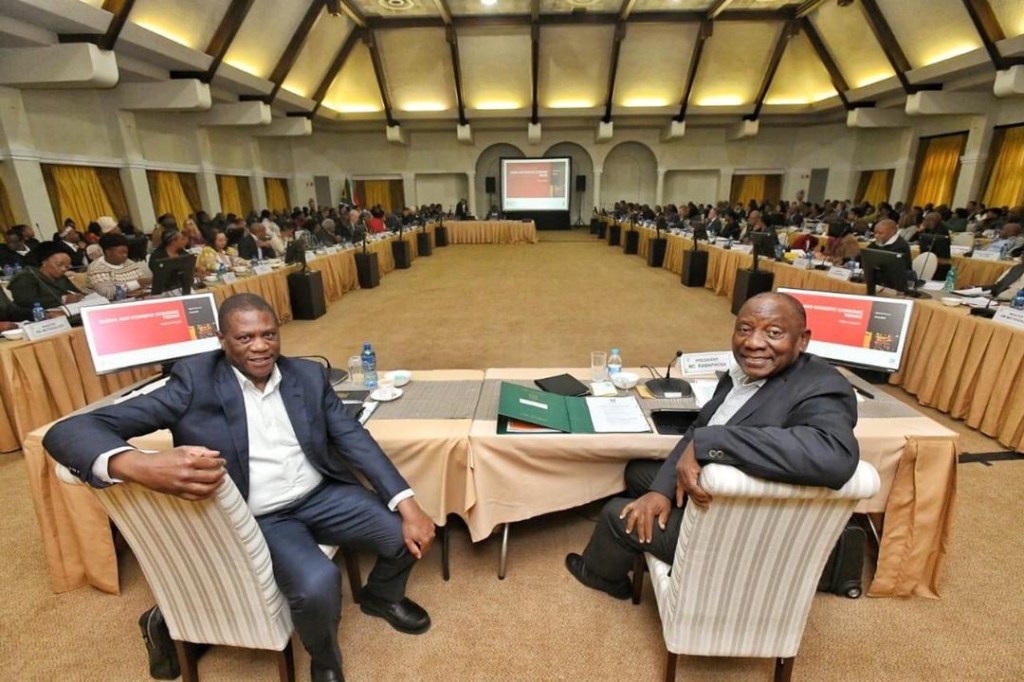
The DA had categorically stated, from its congress, that its main goal is to ensure that an ANC-EFF coalition does not happen and that it would not work with the EFF. Towards the elections, the DA claimed it could consider working with the ANC. The EFF on the other hand was not comfortable working with the DA.
After results were declared, the scramble for power began. When the ANC’s structures met, some members of the party made it categorically clear that they did not want to see an ANC-DA coalition. This occurred amidst allegations that the NEC was divided between the EFF-MK left wing and the DA Centre-right front.
When the ANC declared that it wished for a Government of National Unity (a GNU) negotiations between parties began. While this publication has no access to the full documentation, what can be said is that a deal was signed by the first sitting of the 7th Parliament between the ANC, the DA, and the IFP.
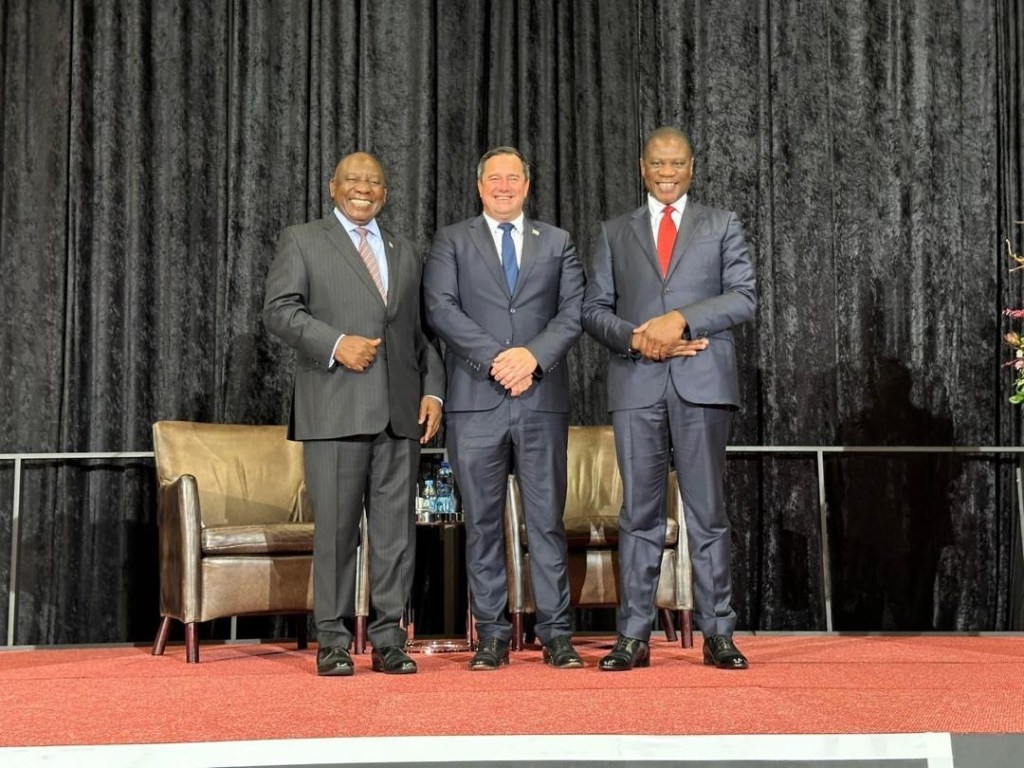
This has sparked major debate in the country. Can it really be said that this is a GNU? While the ‘74-’76 GNU brought together different spheres that fought bitterly towards a semblance of unification, this dispensation does not. It may even be dividing the nation further. The progressive caucus in Parliament, that included parties like the EFF, ATM, UDM and more, suggests that this is clearly a coalition and not a GNU.
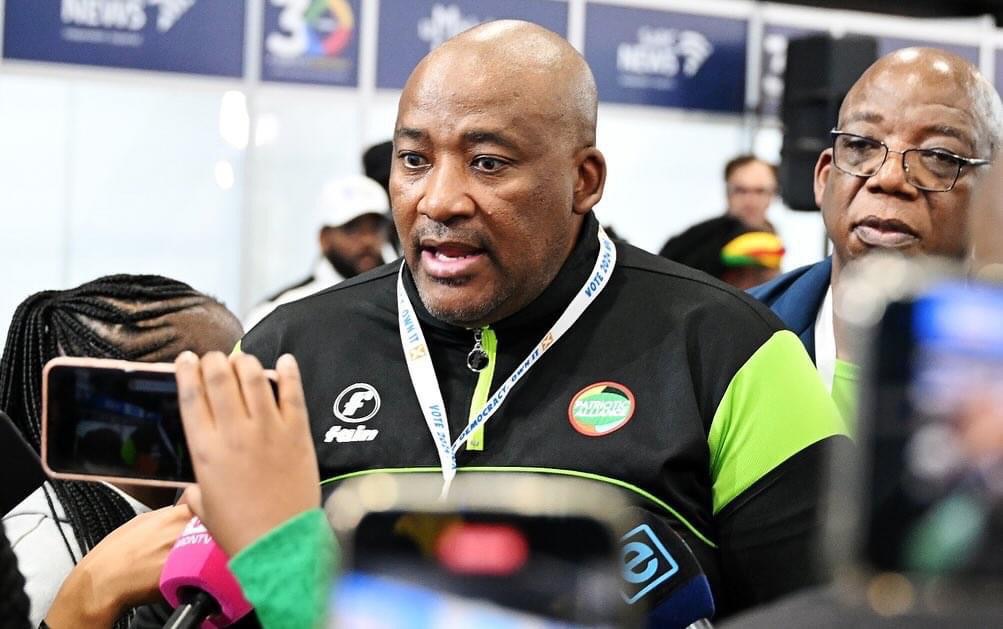
Other parties would later join the GNU, including Gayton McKenzie’s Patriotic Alliance, the UDM, FF+, and more. Cabinet seats have been shared between the ANC, DA, IFP, UDM, PA, and FF+. It would be interesting to watch how [in particular] the DA settles into [shared] power. Will they sit with the ANC? Will they be agreeable? One has to admit that rifts and tensions have already formed and are visible. What commentators and analysts will be watching for is the cohesion of government (or lack thereof) and how it will run between now and 2029. Clearly all members of the GNU want absolute power in 2029, and that may compromise progression till then.
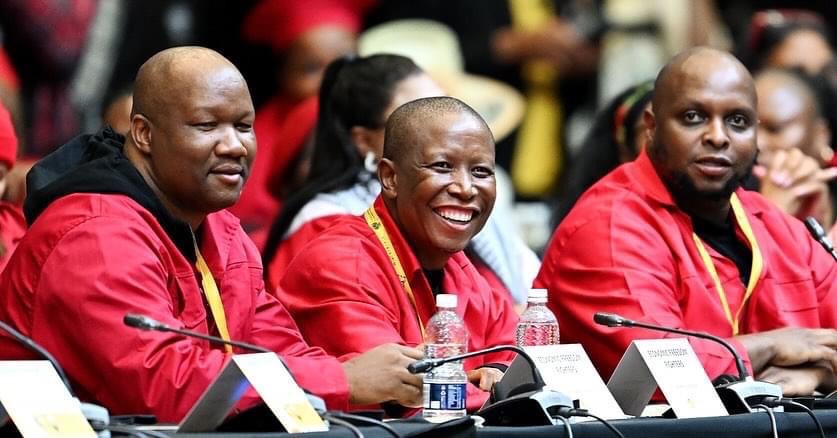
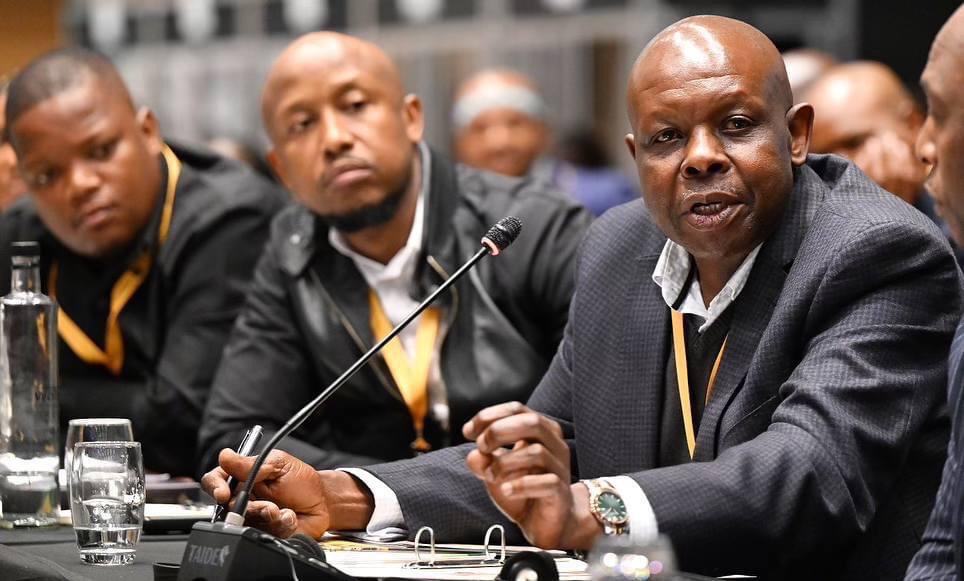
While the government organizes itself, the opposition settles as the MK party finds its way into parliament after boycotting the first-sitting. The leader of the MK in Parliament, Dr. John Hlophe, has been nominated to sit in the Judicial Service Commission – much to the dismay of several Members of Parliament of the DA and FF+. Parliament did not accede to their complaints. It will be interesting to see how opposition parties have geared themselves to act. Eyes will be upon former Judge and leader of the infant MK party, Dr Hlophe; Julius Malema, who says that the EFF brings a less volatile polity; Vuyo Zungula, who seems to be an intellectual asset in Parliament and Mmusi Maimane, who returns to Parliament under a new party.

Analysts and commentators are divided. Will this be beneficial to the State and her people? Or will it simply line the pockets of the rich even more? Many believe that the presence of the DA in government will improve governance and attract investment in South Africa. Others, on the other hand believe that this new dispensation will ensure that the black South African is not as empowered as they should be in a post-’94 South Africa.
As a commentator, many things can be said about this dispensation. One thing that can be said is that while Hon John Steenhuisen (Leader of the DA and Minister of Agriculture) suggests that 61.99% of South Africans either voted for the DA or the ANC, 73.28% of South Africans voted for left-leaning policies in the ANC, EFF, and MK party.
Lines have been drawn; the games begin.
We will watch how this dispensation will benefit the treasury of the State, the private sector, and the poor South African (President Ramaphosa’s Tintswalo and JJ Tabane’s Tinyiko). The question remains, where do Tintswalo and Tinyiko fit into this new dispensation?
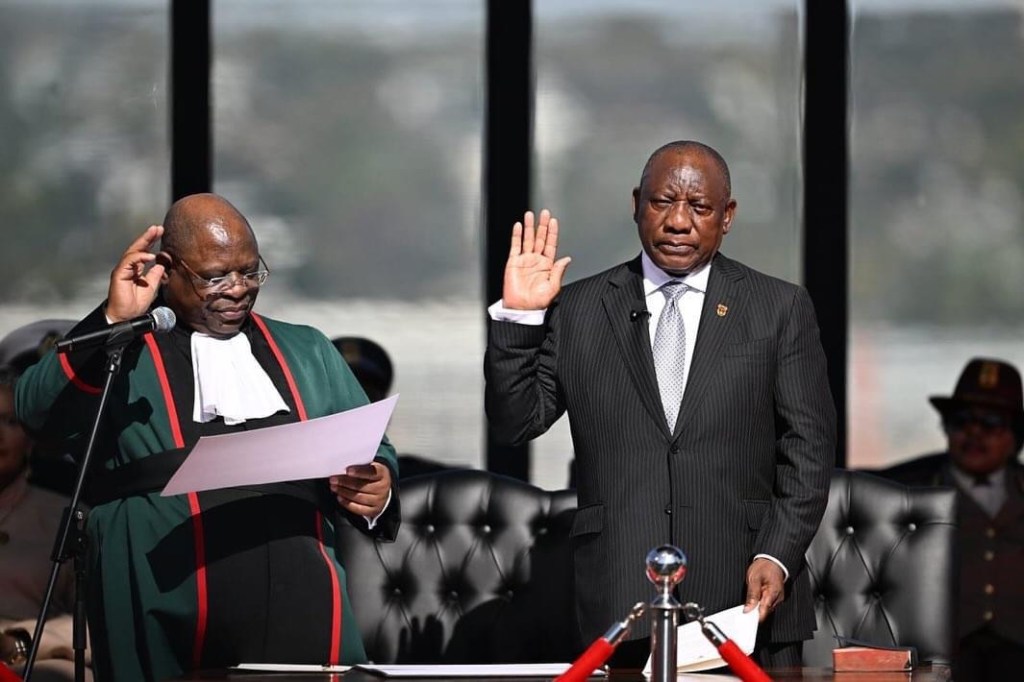
I, for one, cannot wait to see how the ‘National Dialogue’ will be conducted. Hopefully it will not be tampered with by the government and will purely reflect the voice and will of the People, unlike what we have seen in other states. This will be essential for the progression of South African society, and the State. The people must govern. The people will govern.
 The San African
Leave a comment