
Abstract
African men have faced, and continue to face, various forms of trauma that, beyond fracturing self-control, consistently exacerbate a masculine dominance characterized by violence and problematic responses to chaos, leading to further instability.
BACKGROUND INFORMATION
Male dominance has always been the heart stone for everything around the world, particularly African countries. While some people believe it to be only in leadership roles, others established that, men tend to lead as doers of the immoral and unacceptable behaviors. Some studies categorized this specifically in context of maladaptive behaviors. Such issues have led to fueled debates universally, mainly on what really happened to African men, because clearly, this is an issue of concern that indicates the cry of unhealed wounds in men. Wounds that if not healed, may lead to the downfall of African nations.
Men are often labeled as absent fathers, bar owners, substance and drug abusers, and homeless drug dealers who neglect their health, risk their lives crossing dangerous waters, and are more likely to be suspended from schools, commit suicide, and engage in criminal activities. The prison population reflects a stark reality, with far more men incarcerated than women, and men continue to lead as perpetrators of numerous social problems. This narrative suggests that men are more entangled in societal conspiracies as evildoers than women, painting them as the root cause of every nation’s troubles, particularly those involving violence. The pressing questions now are: why is this the case, how has it come to be, and what can be done to truly understand men in a way that may change this situation?
INTRODUCTION
Males like any other newborns, are born with as many neurons as adults, but they tend to be more vulnerable to traumatic disruption: mainly because they receive incomplete affective attunement or no attunement at all, which later on cultivates the variables that break down self-regulation, hence they tend to be involved in several maladaptive behaviors and violent behaviors within communities. Since I am an African and grew up among males in African communities, my arguments will be based more on socialization within African communities. African cultures are generally very similar particularly when it comes to parenting practices and conventions. However, it is important to note that, even in other continents, males tend to encounter similar situations.
Relationships shape the very circuit that enables memory to be processed and self-regulation to be achieved. The mind and the brain are connected and they influence the flow of energy and information within an individual’s body system. According to Professor Modie Moroka, a lecturer at the University of Botswana [LM1] , human connections shape the neural connections of the brain from which the mind emerges. Therefore, for individuals to achieve better self-regulation, there is need for nurturing. Males tend to dominate on crisis because they simply portray self –deregulation.
This self-deregulation is not a result of their brain capacity lacking elasticity, rather it is simply because of broken parenting, fractured social/human connection and illusions of imprinting. Broken socialization gives birth to fractured self-systems which cannot withstand uprising circumstances. Males appear to be vulnerable to the emergence of unforeseen outcomes because they seem to lack the ability to adapt. This issue extends beyond the individual man; it is deeply rooted in biological, social, and psychological factors. These interconnected domains significantly contribute to the challenges that men face, often trapping them in difficult circumstances. Understanding these complexities is crucial to addressing the broader implications and finding effective solutions.
CONCEPTUAL MODEL FOR UNDERSTANDING WHAT WENT WRONG
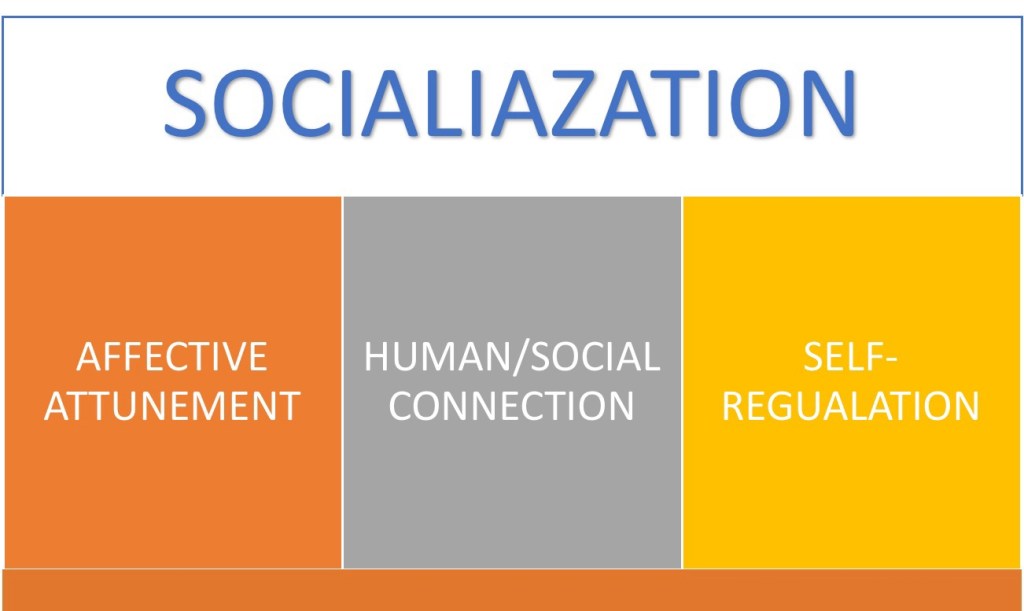
Factors of affective attunement, human connections, self-regulation.
INTERPRETATION OF THE MODEL
The model simply suggests that in order to understand men, there is need to reconsider the process of socialization. According to the model, socialization is the umbrella process that can either destroy men or build men. Through socialization, men acquire affective attunement, human connection and self-regulation. As already established by the relevant literature, socialization is influenced by external factors such as culture and religion. These factors prescribe different roles and principles for both men and women, but it appears that, men tend to receive fractured attunement, broken human/social connection hence the self-deregulation. Therefore, this model seeks to establish that, broken socialization that does not favor men correlates with fractured affective attunement which then contributes to broken human/social connection and later on results in self-deregulation by men hence: men being involved in criminal/ violent behaviors as well as maladaptive, immoral behaviors such as gender based violence, rape, suicide, homicides and many more.
WHY THIS TREND?
Males often find themselves labeled as the primary perpetrators of societal ills due to the profound and ongoing trauma they experience from a young age. This trauma, left unchecked and untreated, spirals out of control, perpetuating harmful behaviors and destructive patterns. As time passes, these men come to a startling realization: the perceived dominance and privilege they believed they held were merely illusions. This dawning vulnerability strips away the façade of control they once clung to, leaving them unable to maintain their self-system. Richard Reeve, in one of his YouTube videos on boys and men, suggests says “men are falling down in every sector, the revolution to close gender disparities that disregarded women long time ago, brought gender disparities that disregard men now, and the world seems not to be interested in closing the gap the same way they did for women”.
Moreover, the political and cultural set ups that appeared to be favoring men, were actually destroying them. With women revolution and technological revolution, men are often found feeling worthless and useless, hence destroying their ego and self-system. The men’s ‘self’ was built by the same African culture that encourages them to have a closed mindset of dominance and power and to use masculinity everywhere. Now that women are rising to power, men are starting to realize that they are losing the title of control, power and privilege. Some then find it difficult to accept and adapt, resorting to suicide, homicides, manipulation and gender-based violence.
Richard Reeve argues that “we need a new script for what it means to be masculine; the old script is not working anymore.” Just as women have moved beyond the traditional roles of homemakers and mothers to become leaders and scholars, men too must learn to adapt to the changing social landscape. This means embracing equity and equality, understanding that the roles once rigidly assigned by gender are now fluid. Men need to be educated on how to balance this new societal revolution, recognizing that they, too, can take on roles traditionally associated with women. Simple practices, such as bathing their babies, can be the beginning of this change. The African socialization process has long been flawed in its approach to masculinity, and it is now crucial to address and correct these fallacies. The time has come to redefine what it means to be a man, fostering a generation of men who are not just strong but also nurturing, empathetic, and balanced in their approach to life.[LM2]
HOW DOES A LACK OF AFFECTIVE ATTUNEMENT CONTRIBUTE TO THE SITUATION OF MEN
Daniel Siegel in his YouTube video (allo-parenting), states that, affective attunement means a contingent on the parent’s capacity to provide a secure base and a holding environment: which in simpler terms amount to parenting. Parents provide a secure base for children through parenting. Daniel Siegel states that, allo-parenting suggest that, mammal species evolved to share child bearing, babies need attachment figures and soothing. Universally, parenting start with families or at home, which is why we have common proverbs like “charity begins at home”, meaning that an individual’s character is shaped first at home by parents. In Botswana, a Setswana statement is usually used “ke ngwana wa ga mang?” which implies that how the child displays themselves in public, is probably derived or imitated from their parents whether bad or good.
Males and females are socialized differently, particularly in Africa. Young boys are taught to be leaders, superior, strong, resilient, protective and vicious both physically and emotionally, while young girls are taught to be fragile, inferior, loving, respectful and caring.
Daniel Siegel mentioned an important aspect of attunement saying it brings integrated communication. Integrated communication shapes energy flow and results in integrated brain growth. Children who receive integrated communication tend to have integrated resilience, while those who do not tend to lack integration. Therefore because of how boys are socialized, they grow up to be men who shy away from expressing their feelings, from seeking help when they cannot handle situations, simply because they are required to be strong. It is then that, they choose violence, bottling up issues, denial and inoculation because they believe that showing emotions weakens their self-system. A Setswana proverb “monna ga lele” is used to emphasize that a man should not show any weak emotion even if they are hurt or hurting. It is this kind of nurturing that turns men into creatures who respond to issues through violence or do not respond to issues at all, hence, depression, intimate partner violence, sexual violence against young girls, murder, and robbery: mainly because they lack proper communication skills and believe the only way to save their respect and dignity is through aggression and superiority. Males despise shame. They often resist seeking medical attention because they associate illness with weakness, a perception that can severely damage their sense of masculinity and ego. To them, admitting to sickness or needing medication is seen as a failure to embody the strength that society expects them to display. This fear of shame and vulnerability often leads them to avoid hospitals or any acknowledgment of their physical or mental health struggles. The societal pressure to appear strong at all times contributes to this reluctance, perpetuating harmful stereotypes about masculinity that can have serious consequences for their well-being.
Moreover, men are not given love during parenting stage, marriage and human connections within societies. They are considered as superior and given total respect, which encourages them to be bosses not only to the world but to their emotions as well. Love is the brain’s way of nurturing another brain (Lecturer, Modie Moroka, 2023 in SWF 402 class).
Males need attunement not respect. They often reject nurturing during marriages because they were parented to be strong hence they demand respect not love. They think love makes them weak and inferior, hence, intimate partner violence when they feel disrespected, vulnerable and weak. This then leads to males acquiring narcissistic injury which results in exploitative behaviors and exploitation intimacy. Just like Bruce Perry, I wish men could be asked “what happened to you?” Their tyranny of silence does not start with lack of self-regulation, but it was given birth to by fractured affective attunement. Reeves (2023), argues that problems do not go away when we do not address them, they go somewhere else and parents are not indulging their boy children.
For example, Leiros et al (2013) conducted a study and found out that, Early Maladaptive Schemas (EMSs) and aggressive sexual behavior in teenagers are correlated with adverse early attachment experiences. Male students who have committed any form of sexually aggressive behavior exhibited significantly higher levels of EMSs from the disconnection and rejection domain: mainly mistrust and abuse (Leiros et al, 2013). Therefore men being denied early attachment gives birth to broken men who resort to violence and immoral acts to seek fulfillment.
HOW DOES HUMAN CONNECTION WITHIN AFRICAN SOCIETIES LEAD TO THE SITUATION WE FIND MEN IN
Daniel Siegel in one of his YouTube videos stated that “we live in a community and look up to it for attention, awareness and mindset, but communities do not support alloparenting: particularly for men in Africa. African men are treated more like supernatural beings and gods from a very young age where they could have been nurtured. All children within communities need optimistic trust which they get through attention, awareness and mindset. Lack of trust fractures a child’s brain development, hence slowing down their self-control, which in men becomes worse mainly because, scientifically, it has been proven that males take more time to develop impulse control than females. Therefore, the culture that perceives men as adaptable to different settings without being helped destroys men’s brain, and it usually happens from early stages of child development.
Human connections shape neural connections of the brain from which the mind emerges. How we think, process energy and information is largely influenced by our connections within the environments at which we live. The primary socialization is family then society. It is within societies that we find culture and our belief systems. The principles we hold are influenced by our culture and religion. African countries, particularly Botswana, are big on culture. Various societies respect and uphold their culture as though their lives depend on it. The same cultures that teach “monna ke tlhogo ya lelwapa”, that is, a man is the provider and head of the family. The question now is: what happens if a men cannot provide or be the breadwinner of his family? These are the men we see resorting to robbery, suicide, manipulation, crime and end up being depressed. In addition, the same religions that teach men to be pastors and preach, putting them under pressure to be perfect, righteous role models even though they might be at the edge of falling. It gives them the illusion that they are dominating the world hence the need to present themselves as perfect and untouched by any challenges, hence they sideline challenges.
In addition, human connection is genetic, particularly in Africa (my perspective). That is because, most norms and values that socialize people undergo generational transition. That is because, how men were viewed ten years ago affects how men are viewed today. It is like a generational curse. The need for communities to uphold their ancestor’s beliefs fractures new generations because instead of correcting where said ancestors went wrong, the beliefs are imposed on children. For example, the belief that men cannot bath children in Africa. Bathing a child is a practice that builds love or attunement, therefore both men and women should experience the process. These children grow up without fatherly attunement even though they were there. It is also because of such situations that makes men to admire young girls sexually because they confuse parental love with sexual feelings. They lack the experience to be drawn to children in a non-sexual way, now when the attachment happens, they think it’s sexual and cannot control themselves.
Social interactions foster a positive response by citizens, it encourages engagement and collective action in addressing issues. Therefore if one gender group experiences fractured human connections due to how the world perceives them and prescribes their roles, it is highly possible that the group dominates in fueling issues of concern that communities seek to address. For example, according to Scoot and Maerz (2017), men who abuse their intimate partners often disclose that they themselves have been victims of various forms of abuse, neglect and violence. Men avoid dealing with past victimization in part because social ideas about masculinity lead them to think of themselves as flawed for feeling vulnerable (Scoot and Maerz, 2017).
Furthermore, it is not only the past that influences men to dominate on prevailing issues. Human connections that encourage the rise of feminism are enemies to men’s ego. It fractures their belief on superiority, dominance and respect (my perspective). Therefore, they feel the need for them to defend their title. The need to defend the title they perceive to be born for, fuels violence as they believe it is the only way to keep females from rising to power.
HOW DOES SELF DEREGULATION LEAD TO THE SITUATION WE FIND MEN IN
In science, particularly neurobiology, it is believed that self-regulation happens in the pre frontal region of the brain, which consist of the right and left hemisphere. The region is accountable for regulation of emotion, emotionally attuned interpersonal communication, response flexibility and self-awareness. In particular, the right hemisphere is responsible for soothing and the left hemisphere for interpretation. Affective-attunement and human connection shape one’s self-soothing and interpretation (Daniel Siegel). Affective attunement and social connection are contributory factors for self-regulation to occur; mainly because, without them, individuals lack relationship qualities like/; warmth and security, relatedness and engagement, thinking and reasoning, problem solving, using ideas in a meaningful and functional way, back and forth emotional signaling and gesturing. Therefore, because males receive little to denied attunement, they tend to be perpetrators on crisis as they lack the full capacity to regulate themselves.
Richard Reeves in one of his YouTube videos of (boys and men), said that “girls are more organized than boys because they develop better impulse control and lower sensation thinking before boys”. Indeed, men are doomed, mainly because on top of delayed development, culture does not teach men accountability and responsibility, rather woman are taught accountability when handling issues at home, they are taught organizing skills through cleaning, budgeting, cooking and packaging, while men lack impulse control hence, lack of organizational skills and accountability. The fight to understand men starts with understanding the trends in socialization that prescribe roles to men. As mentioned earlier, the fight is bigger than just a man as an individual. It’s more on a men as an individual nurtured by parenting, relationships and self-control.
PERSPECTIVES FROM RESEARCH ABOUT SOCIALIZATION
There are several different theoretical and research approaches to the study of socialization by frequently competing basic tenets and apparently contradicting evidence. As a way of integrating approaches and understanding discrepancies, it is proposed that socialization processes be viewed from a domain perspective, with each domain characterized by a particular of social interaction between the object and agent of socialization and by specific socialization mechanisms and outcomes.
PERSPECTIVE BY DEVELOPMENTAL PSYCHOLOGIST
PARENTAL CULTURAL SOCIALIZATION OF MEXICAN-AMERICAN ADOLESCENTS FAMILY. OBLIGATION VALUES AND BEHAVIOR, KIM M. TSAI, EVA H. TELZER. NANCY A. GONZALES. J FULIGNI, CHILD DEVELOPMENT
According to Tsai, developmental psychologists have a long history of interest in how children are socialized to become mature, competent and contributing members of the social community. Even though psychology is linked more to the brain and mind. When it comes to socialization, psychologists focus more on the agents of socialization as to be the domains in child development. According to Buganda (2000), a domain analysis has also been applied to socialization, with the realization that different caregiver-child interactions mediate the acquisition of different socio-emotional skills and tendencies.
According to Grusec and Davidov (2010), developmental psychologists view socialization as a reflection of diversity and interconnections in human development. They are more based on how socialization supports children’s development in social, emotional and intellectual areas. They propose that socialization processes be viewed from a domain perspective, with each domain characterized by a particular form of social interaction between the object and agent of socialization. Agents of socialization being family, society and schools.
THEORETICAL PERSPECTIVES
SOCIOCULTURAL THEORY
A Russian psychologist Vygotsky proposed the sociocultural theory, emphasizing the significant influence of social interaction on cognitive development. In addition, Piagent theory of development emphasizes the different stages of child development and emphasizes that external factors such as culture can disrupt the stages. According to Main (2021), Vygotsky’s ideas resonate with Piagent’s in the sense that both underscore the importance of active engagement in learning. However Vygotsky places a stronger emphasis on social factors in shaping cognitive schemas. Vygotsky appreciates that children’s abilities and understanding evolve with time and experience during that time, cultural roles and activities around the child, influences their development. That is to say, experience shape brain structure. Therefore, this theory is relevant on understanding men’s development. It backs up the idea that culture or societal factors largely contributes to how males behave and respond to issues as they develop.
STRUCTURAL FUNCTIONALISM
According to Scheewind, the theory of structural functionalism is closely associated with the work of Talcott Parsons. The main question that Parsons addresses in his theory refers to processes of how individuals become members of a given society in order to guarantee the survival and maintenance of the social system (Parsons and Bales, 1955). According to Parsons, society is a global social system. The individual person participates in the social system by interacting with others in accordance with the various roles and positions he/she holds in that system. The global social system itself consists of hierarchically ordered subsystems that are characteristics by corresponding institutional norms. On the one hand, these norms are supposed to be congruent with society’s integrated value system and, on the other hand, to determine the expectations and the rules attached to specific positions and roles. These are further specified with respect to a set of pattern variables comprising for example, particularistic versus universalistic. In this respect, the family plays a particular salient role (Parsons and Balels, 1955). Drawing heavily on Freudian psychoanalytic theory, Parsons contends that via identifications with their same sex parents boys and girls become socialized into specific male and female role patterns.
CULTURAL RELATIONAL THEORY (RCT)
“Deposits that we grow through and toward relationships throughout our lives and that growth fostering relationships are the source of meaning and empowerment, (Jordan, 2013)”. The theory was developed by Jean Baker Miller in order to understand how people move and grow through relationships, “which is in direct response to the traditional perspectives of autonomy and individualism (Miller, 1986)”. Relational cultural theory is a psychodynamic theory which seeks to understand human relations and development. Relational cultural theory seeks to explain psychological development using the concepts of connections and disconnections. It explains that all individuals yearn to be accepted with kindness and oneness. Therefore, this theory can be used to understand, to know and learn how relations are formed and their influence to men. Moreover, it can be used to dig more information on growth fostering relationships and how empathy and empowerment are rooted to human development. According to Jordan (2020), the initial purpose of relational cultural theory was to study psychological development and how to prevent psychological problems focusing on women’s development. Later, the theory began to develop and cover more aspects influenced by connections and human development.
REFERENCES
A, E. B., Keane, T. M., & Friedman, M. J. (2009). Effective Treatments for PTSD: Practice Guidelines from the International Society for Traumatic Stress Studies.
Briere, J. (1996). Trauma Symptom Inventory Professional Manual. Psychological Assessment Resources, Inc.
Dawes, R. M. (1994). House of cards: Psychology and psychotherapy built on myth. New York, NY: The Free Press.
Ley, C. R. (Ed.). (2002). Treating Compassion Fatigue.
Summerfield, D. (2001). The experience of post-traumatic stress disorder and the social usefulness of a psychiatric category.
Foa, E. B., Keane, T. M., & Friedman, M. J. (2009). Effective Treatments for PTSD: Practice Guidelines from the International Society for Traumatic Stress Studies.
Courtois, C. A., & Ford, J. D. (Eds.). (2009). treating complex traumatic stress disorders: An evidence-based guide.
Herman, J. L. (1992). Trauma and Recovery: The Aftermath of Violence – From Domestic Abuse to Political Terror.
Van der Kolk, B. A. (2014). The Body Keeps the Score: Brain, Mind, and Body in the Healing of Trauma.
Jordan, J. V (2000). The role of mutual empathy in relational cultural therapy. In session: psychotherapy in practice, 55, 1005-1016
Jordan, J V., (2008). Recent developments and relational cultural theory
McCauley, M., (2013). Relational-cultural theory, Fostering Healthy Coexistence: Through relational lens.
Miller, J. B. (1976). Toward a new psychology of women. Boston Beacon Press.
Miller, J. B (1986). What do we mean by relationships? Stone center working paper series
Miller, J. B., & Stiver, I, P., (1995), Relational Images and their meanings in psychotherapy, Stone center working paper series.
Masten, A.S. (2014). Global perspectives on resilience on children and youth. Child Development, 85(1), 6-20.
Ungar, M. (2006). Resilience across cultures. British Journal of Social work, 38(2), 218-235.
Saleebey, D. (Ed). (2008). The Strengths Perspectives in Social Work practice (5th Ed.). Pearson.
Leiros, V, L, S, Carrallo, J and Nobre P. (2013), Early Maladaptive schemas and aggressive sexual behavior: A preliminary study with male college students. The Journal of Sexual Medicine, 10(7), 1764-1772
Scott T.A and Maerz L. (2017), Complex trauma and dominate masculinity: A trauma-informed narrative therapy approach with men who abuse their female partners: Innovations in interventions to address intimate partner violence, 75-92
YOUTUBE VIDEOS I WATCHED FROM THE LINKS PROVIDED
BRUCE PERRY DANIEL SIEGEL
RICHARD REEVES
BRENE BROWNS
BESSEL VAN DER KOLK
GBBOR MATE
JJOHN RIGG
PROVERBS USED
Monna ga lele
Monna ke tlhogo ya lelwapa
Ke ngwana waga mang?
Charity begins at home
[LM1]The article will be read as being written in the capacity of The San African so relationships with individuals referenced must not be personalized.
[LM2]Potential excerpt paragraph
 The San African
Leave a comment