
Having gone through a post-colonial Southern African education system, one thing that many young black boys would have heard is “cut your hair”. The assertion, although subtle, suggested that African hair is intrinsically unkempt, uncouth, and socially unacceptable; that the hair of the African, either unscrutinized by the painful teeth of a comb or any longer than the African bean, is an insult to professionalism.
While the intent of this article is not to discuss the ethics of unkempt African hair, it is to analyze and critique the post-colonial African narrative.
In a presentation entitled “Creating a balance between Africa Tourism Accommodation Heritage and Culture”, Kamill Abdul-Karrim (the Managing Director of PAM GOLDING Tourism & Hospitality Consulting) made quite a number of interesting submissions.
On the occasion of the Africa Tourism Leadership Forum 2024, Mr. Abdul-Karrim spoke of a critical element of Tourism: storytelling and the role of the African story.
The premise of his presentation was that cultural tourism is an important element of Africa’s tourism sector. With this premise, one must then interrogate the question of African culture and African identity. This then leads to the contentious matter of history (the historical veracity of the purportedly developed African kingdoms).
With his research of Mapumbugwe, the ancient kingdoms of Zimbabwe, Mali and more, he (among others) have come to the conclusion that ancient African Kingdoms rivaled the highly celebrated kingdoms of Europe.
The development and architecture of these ancient kingdoms were a wonder to be reckoned with. This was until the ‘colonial interruption’. This presents colonialism as an interruption of African civilization and development, beyond just a social ill.
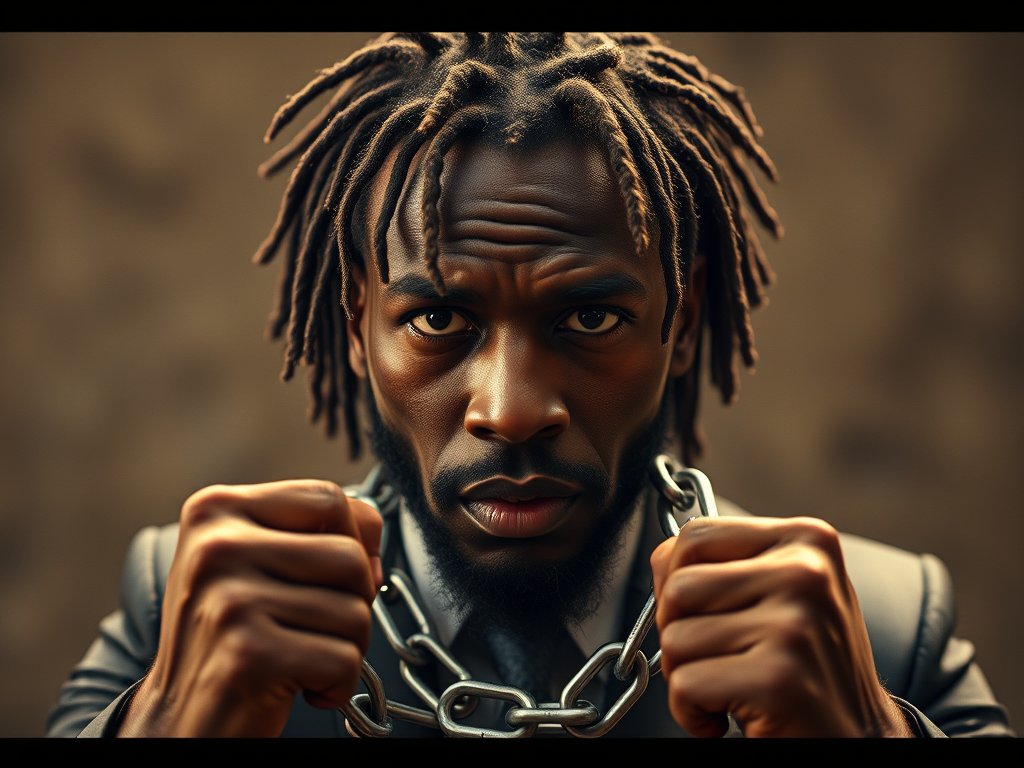
Abdul-Karrim then submits the necessity of an African Renaissance and Resurgence. Not only is this a revolutionary recapitulation of the African identity, it is a “Reclaiming of the Future”. The wording is not accidental. At it’s core, the suggestion is that the future of Africa is in its past, before the colonial interruption. Fundamentally, a sense of African developmental progression is found in the developmental paradigms embedded in Africa’s pre-colonial reality.
Therefore, the answer for Africa’s tomorrow is Africa’s yesterday. That is the paradigm of Afrofuturism. This is an Afro-identification outside of coloniality, its roots, and its effects.
He suggested that the Eurocentric interpretation of African identity must be arrested, and the African storyteller must write the right history; returning us to an African consciousness and harmony.
In this light, Mr. Abdul-Karrim suggests that digital infrastructure be used to re-enliven the African heritage and culture. Essentially, a fresh new breath must be breathed into African culture to renew its vigor, in the 4th Industrial Revolution. Techonological elements can be used to invigorate the African imagination and memory.
Returning to our initial motif, the unkempt African hair, it is quite possible that a Eurocentric interpretation of African realities may blur our vision of those realities.
It is then necessary for the African storyteller to “redress the African narrative”. It is essential that the African storyteller gives credence and honour to the African narrative and reality.
As an African, I find it of paramount importance that the African person can connect with a progressive-developmental paradigm that speaks to their African identity.
In the post-colonial 21st century Africa, the African person must be able to reimagine what it means to be an African. We must be able to return to our Africanness, to go forward in our Africanness – to redress our African identity in a garb of honour.
To move forward, we must remember who we are. In the words of Mufasa to his son Simba, “REMEMBER”.
Therefore, I am tempted to suggest that, whether in the field of Diplomacy and International Relations, Tourism, International Trade and Industry, or more, the African presentation of the African identity (interpreted through the African lens) will present a gift to the world – opening the world up to a true possibility of pure cultural tourism in Africa. Imagine a world in which the African states (especially in the Southern region) engrave the Ubuntu/Botho philosophy into their governance and diplomatic code of conduct. Not only will global stakeholders wish to come and see the lions in the north and the waters of the Okavango, but they will wish to see ‘What it means to be an African’. True African identity in the global market cannot be truly encapsulated by a dashiki cloth and a djembe drum.
In the words of Kwame Nkrumah, repeated by Thabo Mbeki, “I am an African, not because I was born in Africa, but because Africa was born in me.”
 The San African
Leave a comment