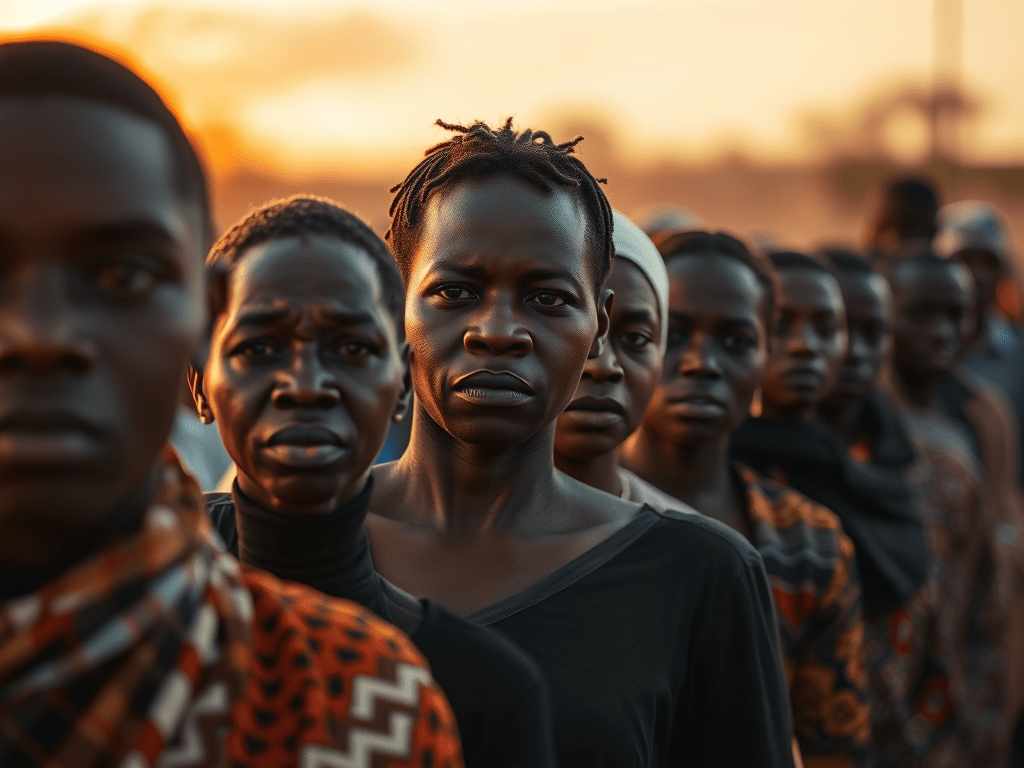
Standing on the precipice of a critical moment in Botswana’s history, one is forced to admit that tensions are truly high. These elections may be the most contentious in a long time. Last night Batswana’s eyes were glued to their screens in order to hear the packages offered to them by the various Presidents and their parties vying for the Presidency and control of Parliament. Observing the debate, and the chatter around it, one of the most intriguing phenomena around this particular election is ‘the mind of the voter’.
In this article, I’d like to outline the possible “thoughts of the voter”. Often times people tend to miss out on how the voter thinks, thus failing to provide proper analysis. While this is not a comprehensive study, I would like to present a few psychological dispositions as we approach the polls. This is not a set of predictions, it is just an analysis.
- VOTER MEMORY
“Remember who put you through school.” This is an example of a thought in the African voter’s mind. This thought, as confirmed by voters in South Africa and Botswana, rings in their minds on the morning of elections, in the queue, and as one stands before the ballot box.
Essentially, voter’s remorse invokes a memory of the work of liberation movements and the apparent guilt causes them to cast their vote in the direction of “the devil we know”.
Additionally, the voter may find security in a safe vote. Keep the BDP in power. “We owe them for all they’ve done, don’t we?” the voter thinks.
- SAFE CHANGE
While many Batswana would not typically be comfortable with alt-right electoral change, something that is a more comfortable option could be deemed as safe change.
Safe change basically suggests that things change without threatening order drastically. While change is sought after, and maybe even pursued, it is change that is rationalized and within particular boundaries, while maintaining the trust of the electorate.
Many voters have made the conscious decision that they do not want to stay with the ruling Botswana Democratic Party (BDP). Where they are to go becomes the follow-up question. While they may be resolute in severing ties with the “outgoing party”, they may not be resolute about the direction they’d wish to take from there.
Since its inception towards the 2014 elections, the UDC has been systematically working towards being the first alternative, the safe option after the BDP.
While this may not particularly sound important, many voters need a safety net, even when they romance the idea of regime change.
Essentially, many Batswana may feel that casting their vote away from the BDP is risky enough. They would need a relative safety net in the Umbrella for Democratic Change rather than pursue a riskier smaller party.
- THIRD WAY
There are some voters who, with particular emphasis, are not pleased with the top two options and wish to go towards the Botswana Congress Party wave.
The BCP has strategically placed themselves as the people’s alternative, the third way. In these elections, and even in the debates, the BCP has suggested that it is a strong contender and it is the answer to Botswana’s quagmire.
A number of Batswana, troubled by the problems of the BDP and of the UDC, have settled (at least intellectually) in the electoral ambit of the BCP. The BCP may experience an influx of goodwill votes from different constituencies with the “third way” perspective.
- STALEMATE
Many analysts, commentators, and even political activists share in my thinking that a hung parliament is on the horizon. It is seemingly inevitable.
This result is brought about by the fourth electoral disposition; The STALEMATE. This disposition is observed when the electorate are torn between parties and leaders. With this disposition, there is an increased possibility of a lack of a majority.
This then raises the question, which coalition would the voter like to see? Judging from the voices of voters, it seems that the top two contenders for the Presidency are the BCP’s Mr. Dumelang Saleshando and the UDC’s Adv. Duma Boko. Could this mean that a grand coalition between the BCP, the BPF, and the UDC, would be favourable to the voting populous? Or will the players offer an alternative?
- NO WAY
Then there is the final disposition, as expressed in this article. The No Way disposition. This posture is occupied by registered voters who will not vote and citizens who have not registered to vote. Whether due to personal reasons or because of a despondency, this is a critical demographic as it may cause a sway in one direction or the other.
From a basic analysis of the political climate at this time, it is an unavoidable truth that these elections will supply a surprise to the electorate. It must be acknowledged that the stakes are high and that this is an important election. All I will say is that I am excited for October the 31st. Only then will we know what the voter really thinks.
 The San African
Leave a comment