In some rooms, Christianity and colonialism are considered to be synonyms; brothers in arms, insperable even in the face of divine intervention. There are some who would go as far as to say that Christianity functions exclusively as an imperial tool in the proverbial toolbox. An axe, sword or some other hypothetical implement that serves only to progress the euro-centric narrative.
This contrasts greatly with the consensus among modern day (and even past time) christians with regards to what it means to be of faith. Followers of Christ defend the cross fiercely, arguing that the foundation of the Christian faith is love and acceptance of all, regardless of nationality, race or some other arbitrary measure of worth.
In between these starkly contrasting perspectives of the Christian doctrine, exists a colourful spectrum full of nuance, ambiguity and insight into the ways in which this Abrahamic religion has changed the face of Africa forever (for better or worse?).
It goes without saying, in order to properly unpack this issue, one must occupy a position of neutrality. Therefore, as somewhat of a disclaimer, this article is neither an endorsement nor a denouncement of the Christian faith or other religious doctrines but merely an insight into how Africa, religion and the imperial powers of the time danced about one another.
Perhaps the best place to start is where we already are. Why is Christianity often viewed as a conduit for imperial expansion?
The association between Christianity and colonialism stems from the historical role of Christianity, especially Protestantism, Catholicism, and Orthodoxy, as the state religion of European colonial powers. These nations, predominantly Christian in demographic, often intertwined their faith with their colonial ambitions, leading to a complex legacy where religion both influenced and was influenced by imperial expansion.
The advent of this ‘symbiotic relationship’ (for lack of a better term), then perpetuated the idea that Christianity, at its most fundamental form, functioned exclusively to serve the best interests of the empires that built their palaces in it’s principles. Thus, this shifted the narrative, repainting Missionaries once considered “visible saints, exemplars of ideal piety in a sea of persistent savagery” into “arrogant and rapacious imperialists.”
What brought about such an aggressive paradigm shift? To find the answer to this question, we have to circle all the way back to the twentieth century. An era
marked by civil rights movements, anti-colonialism, and growing secularization. Condemnation for the transatlantic slave trade, among other imperial crusades was growing and with it a disdain for the church.
In some regions, colonizers forcibly converted almost all of a colony’s population from their traditional belief systems to Christianity. This forced conversion was often used to justify the extermination of followers of other faiths, the enslavement of native peoples, and the exploitation of land and resources. The imposition of Christianity served not only as a means of spiritual domination but also as a tool for broader colonial control and exploitation.
Christian Colonialism: Inherent nature or Perverted Doctrine?
In order to properly determine the role religion played in the Imperial crusades, there a few points of analysis we must look into:
- The Nature of the Christian Doctrine itself
- The behaviours of key figures in the Church’s heirarchy
- How religious teachings may have been interpreted to suit euro-centric narratives.
It is no secret that The Bible and other Christian texts have been used for centuries to justify violence and war. But how? Could it be that the word inherently contains teachings founded in the aforemention violence? That seems highly unlikely, considering the enitire premise of Christianity is to spread love, kindness and blessings to thy neighbor.
- John 15:12 – “My command is this: Love each other as i have loved you.
- Luke 6:13 – “Do to others as you would have them do to you.”
- Corinthians 16:14 – “Do everything in love.”
These among others, depict a faith rooted strongly in the reciprocity of love and kindness. How then could these text possibly be weaponized to justify centuries of pillaging and colonization? Enter the world of grey areas.
Though the bible does not contain explicit prompts of malevolence, there contains countless instances of verses that, when taken out of context, could (and have been) easily be used to justifysome very heinous actions.
In his publication, Christian Missions and Colonial Empires Reconsidered: A Black Evangelist in West Africa, 1766-1816, Edward E. Andrews, Associate Professor at Providence College writes:
“In 1772 – the same year of Britain’s famous Somerset case – former New Jersey and African missionary Thomas Thompson published a tract entitled The African Trade for Negro Slaves, Shewn to be Consistent With Principles of Humanity, and With the Laws of Revealed Religion. A former slaveowner himself, Thompson relied on scripture, property rights, and a tired characterization of Africans as pagans to conclude that slave trading was “not contrary to the law of nature” and was “as vindicable as any species of trade whatever. “
A prime example of how scripture, supplemented by secularly policies can be used to dehumanize entire groups of people for the benefit of a few individuals. This in fact feeds seamlessly into our next point of analysis.
The Behaviours of key figures in the Church’s heirarchy
Thomas Thompson, considered by many to be a very influential missionary dabled as valiant defender of the slave trade.
“While Thompson suggested that his motives were intellectual only, he dedicated the tract to none other than the Company of Merchants Trading to Africa, the joint stock company in charge of protecting and maintaining the African slave trade. Thompson thus provided a religious defense of the transatlantic slave trade, a trade which knit the British empire together, served as the commercial backbone of imperial power, and infuriated his African protégé.”
The protégé referred to in this text is Philip Quaque whom we will revisit a little later.
Thomas Thompson’s violently racist opinions, though terribly unacceptable today, were a genuine point of contention at the time, causing a shocking divide, even within the church. There were countless other prolific members of the christian institution who saw it morally acceptable to keep slaves, further feeding into the colonial narrative.
There exists a glimmer of light in the darkness. Fortunately, Thompson’s rotten perspectives did not resonate with every member of the church. The publication of his work would prompt one philanthropist to respond just a year later with ‘An Essay on Slavery,’ which aggressively attacked the institution and
declared that it was completely inconsistent with Christian principles. The author’s name was Granville Sharp.
In his paper, he called Thompson’s work out as being “totally false” and “replete with false argumentation.” Sharp had instead, a vision that went in the complete opposite direction of what missionaries were thought to be at the time. One of the first supporters of “A Rainbow Nation” type of society (obviously before the term was coined).
The contrast between the teachings of Sharp and Thompson highlighted the complexity and ambiguity of the church’s relationship with colonialist ideals and interests. These were further exarcebated by the advent of a new species of man within the church.
The Native Missionary
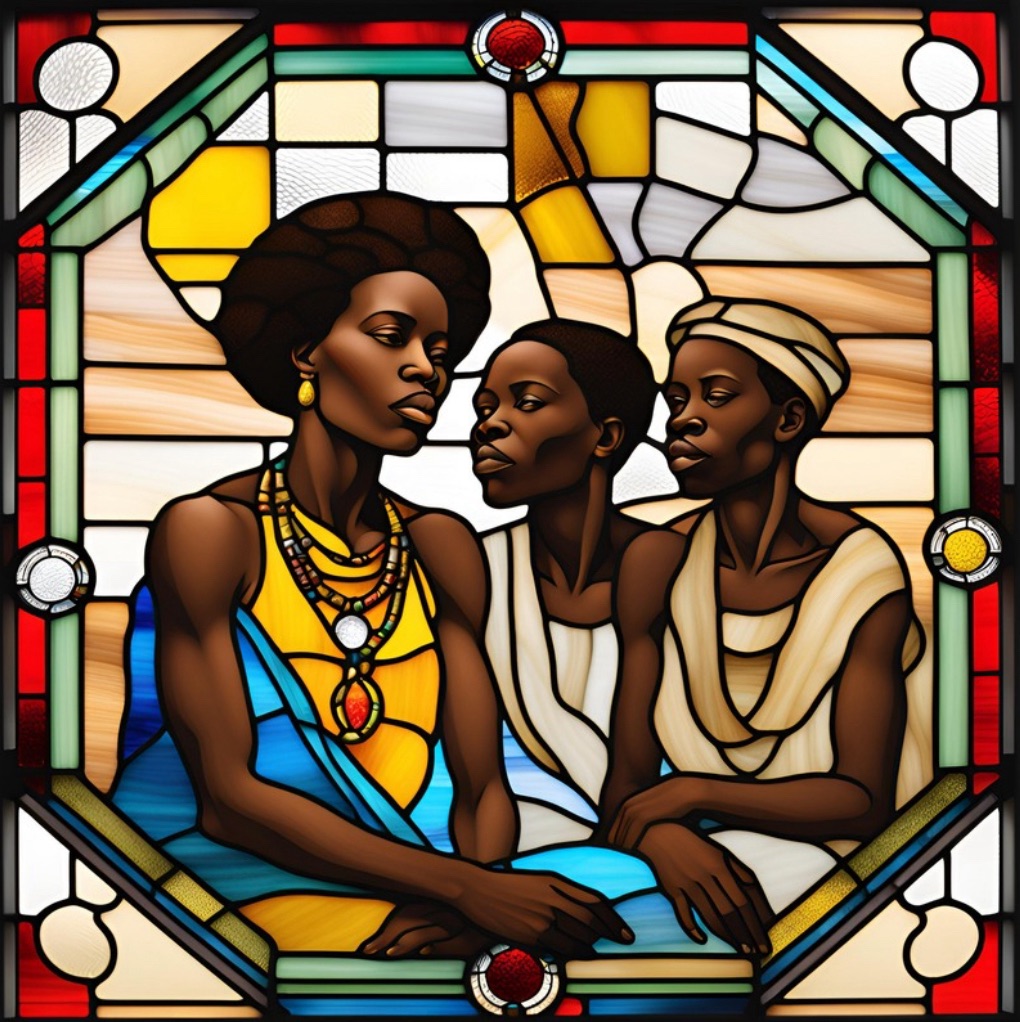
Philip Quaque was the first african to be ordained as a minister by the church of England. In the early 1750s, an English missionary stationed in New Jersey sought permission from his Anglican sponsors to embark on a perilous mission to West Africa. They agreed, and by 1752, Thomas Thompson had established the first official Anglican mission at the Gold Coast, a hub for the transatlantic slave trade. Inspired by the recent surge in native missionary efforts during the Great Awakening in America, Thompson quickly focused on training indigenous people to assist in his mission. Within two years of his arrival, he selected three young boys to travel to England for missionary training. One of the boys died and the other went insane. However, Philip Quaque successfully completed his training in 1765 and returned to West Africa in 1766.
Philip Quaque occupied the ‘no-man’s-land’ between the ideologies of Sharp and the teachings of Thompson. By virtue of his ethnic heritage, he condemned racism, proposing an empire of universal Christian benevolence where religion, rather than race, was the true marker of humanity. However, he was not without his fair share of euro-centric biases.
Quaque often “asserted that all indigenous religious customs, practices, and beliefs
were childish and barbaric. In this way Quaque was little different from his white counterparts.” writes Edward E. Andrews. He scoffed at traditional African
funerary customs, arguing that they demonstrated the “Depravity and Obduracy” of the “Apish” Africans.
Although the minister did posses a mild element of arrogance and a deep seated disdain for the culture of his people, he did indeed carry a burning desire to liberate the natives both spiritually and in the more literal sense. His passionate defense and condemnation of slavery and (certain) colonial ideals eventually lead to his relationship with his european endorsers souring, with the pay discrepency between him and his mentor further accentuating the intensity of his already complex reltionship with the church.
The biggest of his obstacles however, laid in the way he was percieved. Both the europeans and his fellow natives viewed him as ‘just another native.’ Neither afforded him respect or credibility. On the one hand, the europeans refused to listen to a black man preach about the word, with some refusing to attend divine services with him
because they, according to Quaque, “would never come to Cape Coast to be Subservient to, and to sit under the Nose of a Black Boy to hear Him pointing or laying out their faults before them.”
To make matters worse, due to the fact that he spent a decade in England learning and training, he was no longer as competent at his mother tongue as he once was. Quaque now seemed to occupy an ambigious position between the whites of the church and his native brethren. Not quite good enough to be one, not quite african enough to be the other.
Permeated by the anti-african perspectives he had picked up duing his time in europe, he was alienated within his community and for obvious reasons of skin colour, could not seek shelter within the sanctity of his european counterparts’ company. A common problem for some people even today. His case fanned the flames of complexity when it came to the church’s relationship with the natives, having those that looked like them defend the cross with pride, only for them to still be treated like outsiders.
As British historian Andrew Porter said for the nineteenth century, missionaries’ “engagement with empire more often than not took the form of bitter experience,” leaving their “relationship with empire as deeply ambiguous at best.” Examining native missionaries like Philip Quaque restores that ambiguity and demonstrates that the relationships between missionaries and their potential neophytes, and between religion and empire, were much more fragile and tenuous than we have previously acknowledged.
How religious teachings may have been interpreted to suit euro-centric narratives.
In the context of colonial missions, scripture was often manipulated to reinforce and justify Eurocentric narratives. Colonizers selectively interpreted biblical passages to support the subjugation and exploitation of native populations. For instance, the “Curse of Ham” narrative was frequently invoked to rationalize the enslavement of African people, suggesting that their servitude was divinely ordained. This theological distortion served to dehumanize indigenous populations and legitimize colonial domination and the slave trade, portraying European colonizers as benevolent agents of a divine plan, bringing “civilization” and “salvation” to supposedly inferior peoples.
Moreover, the missionary efforts themselves were often couched in terms that reinforced European superiority. Missionaries like Thomas Thompson promoted the idea that Christian conversion was synonymous with adopting European cultural norms, effectively erasing indigenous identities. The imposition of Christianity was presented as a civilizing mission, framing indigenous spiritual practices as barbaric or heathen. This Eurocentric narrative not only facilitated the cultural and spiritual domination of colonized peoples but also perpetuated the belief that European culture was inherently superior, thereby justifying the broader colonial project.
Deliberation
The intricate relationship between Christianity and colonialism is a topic of considerable complexity and nuance. Throughout history, the deployment of Christian doctrine to justify and facilitate European imperial ambitions has left an indelible mark on the world, particularly in Africa. While many missionaries believed sincerely in their religious mission, their efforts often aligned with and supported the goals of colonial expansion, leading to a blend of spiritual and political domination.
The manipulation of scripture to uphold Eurocentric narratives and justify exploitation reveals the darker side of missionary work. Passages were selectively interpreted to rationalize the subjugation of native populations, promoting an image of European cultural superiority. This interpretation was not universal within the Christian community, as seen in the contrasting views of figures like Thomas Thompson and Granville Sharp, highlighting an internal struggle within Christianity itself over the morality of colonial practices.
Furthermore, the experiences of native missionaries like Philip Quaque illustrate the complex and often contradictory roles these individuals played. While they were trained to spread Christianity, their unique positions also exposed the inherent racial prejudices and cultural biases of their European counterparts. Quaque’s story, marked by his struggle for acceptance and his criticism of African customs, underscores the ambiguous nature of the missionary enterprise.
In conclusion, the historical interplay between Christianity and colonialism is marked by a profound ambiguity. While the Christian doctrine is fundamentally rooted in principles of love and kindness, its interpretation and application during the colonial era were often perverted to serve imperial interests. The legacy of this period is a testament to the dual-edged nature of missionary work, where genuine spiritual intentions were frequently overshadowed by the broader agendas of colonial domination. This complex history invites ongoing reflection on the ethical responsibilities of religious practice in the context of power and cultural hegemony.
Article References
- BlackChristian Missions and Colonial Empires Reconsidered: A Black Evangelist in West Africa, 1766-1816Evangelist in West Africa, 1766-1816
- Christianity and Colonialism
- The African Trade for Negro Slaves Shewn to be Consistent with Principles of Humanity and of Revealed Religion by Thomas Thompson







 The San African