“Discover. Empower. Celebrate”

Poverty in Africa: Understanding the Causes and Impacts

Poverty in Africa: Understanding the Causes and Impacts

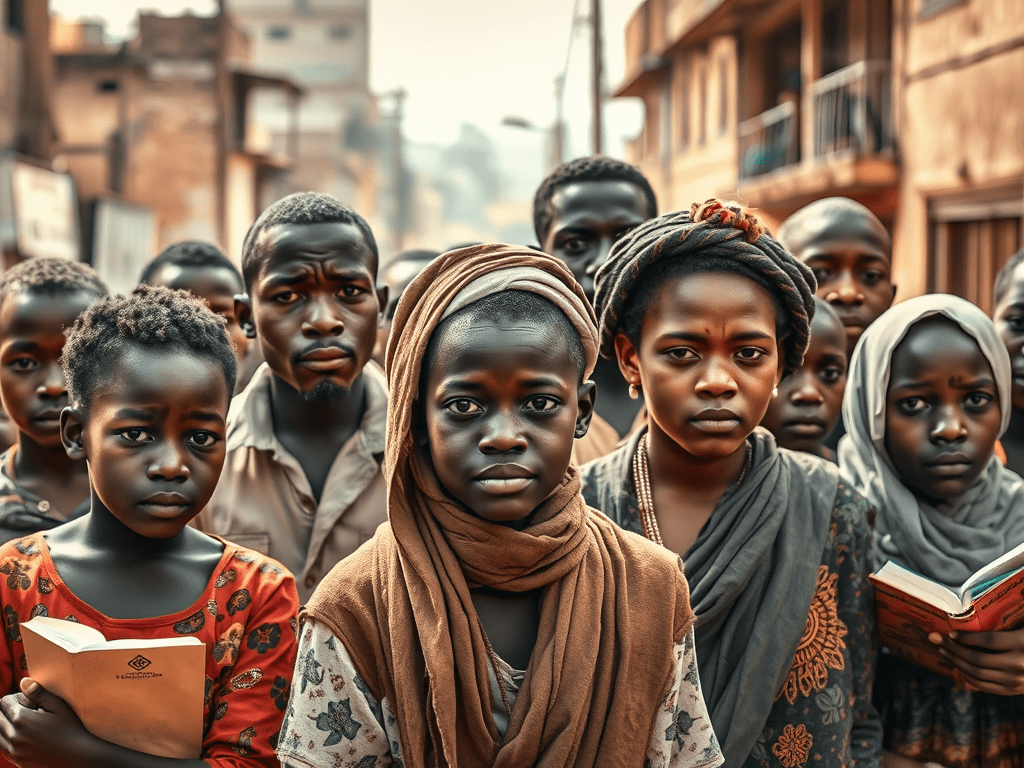
Poverty is a pervasive and complex issue that affects millions of households in Africa. Despite multiple initiatives directed at reducing poverty, many Africans still struggle to access basic necessities like water, food, housing, healthcare and education. Statistics by the World Bank reveal that in 2024, Sub-Saharan Africa accounted for 16 percent of the world’s population, but 67 percent of the people living in extreme poverty. Furthermore, two thirds of the world’s population living in extreme poverty live in Sub-Saharan Africa. In this article, we will delve into the causes and consequences of poverty in Africa in order to gain understanding.

Poverty in Africa stems from a combination of multiple factors including historical, political, social and economic factors.

The most widely recognized key cause of poverty in Africa is colonialism. The colonial era disrupted many traditional African economies and exploited many African indigenous people. Colonialist countries took control of many African natural resources. The effects are still felt today where some of the biggest companies operating in Africa are owned by descendents of colonialists, particularly in the natural resources sectors. Indigenous people of African countries are still being exploited by these companies which prioritize profit over the livelihoods of people. Other countries benefit more from Africa’s own natural resources than the continent itself.

Another key cause of poverty in Africa is the lack of access to education. A huge population of Africans remain uneducated, with the recent Covid pandemic having exacerbated the situation. This leads to a lack of skills and knowledge required in the workplace, therefore rendering people unable to secure good-paying jobs to improve living conditions. Governments end up outsourcing skills, further reducing employment opportunities for indigenous people. The inaccessibility to schooling and libraries reduces critical thinking and imagination skills, therefore lowering entrepreneurial ideas and opportunities.

Economic instability across the world is another factor which contributes to the poverty in Africa. Wars between countries, political elections and natural disasters in other countries affect African national economies. Investments decline and local businesses suffer, amongst other issues caused by economic instability.

The last key contributor to poverty is corruption and poor governance at national level and by business leadership. Funds meant to benefit communities are often misappropriated by those in power, who use them for their own selfish interests. This leads to low quality infrastructure, endangering the lives of the people. Finding employment or securing government contracts has also become increasingly challenging. Nepotism has become a dominant factor, where landing these opportunities is no longer based on merit, skills or education, but rather on personal connections or relationships. The job market has become a “who you know” world.

Other factors which contribute to poverty include cultural ideologies, patriarchy, and illness, among others.

The impacts of poverty on African communities are devastating and far-reaching. To break this continued cycle of poverty, governments, leaders, communities and individuals have to work together to address the root causes of poverty, invest in human development and economic empowerment and create sustainable and inclusive environments.

The narrative told by generations to come has to be one of triumph, progress and prosperity.

Citations
World Bank. 2024. _Poverty, Prosperity and Planet Report 2024: Pathways Out of the Polycrisis._ Washington, DC: World Bank.

  • Poverty in Africa: Understanding the Causes and Impacts

    Poverty is a pervasive and complex issue that affects millions of households in Africa. Despite multiple initiatives directed at reducing poverty, many Africans still struggle to access basic necessities like water, food, housing, healthcare and education. Statistics by the World Bank reveal that in 2024, Sub-Saharan Africa accounted for 16 percent of the world’s population,…

  • THE SILENCE OF THE LAW: WHEN THE COURTS FAIL TO REFLECT THE MORAL CONCIOUS OF THE PEOPLE

    By tlotlego abram INTRODUCTION President Advocate Duma Boko’s overturning of the court’s judgements must not be misinterpreted as an act of undermining the concept of the rule of law in favour of political expediency but an act, ethical, morally righteous in its nature and in all existing structures of objective and validity assessment, necessitated by…

  • Charting Horizons: Reimagining University Education in Botswana for a Just and Prosperous Future

    by Teedzani thapelo On October 30, 2024, Botswana witnessed a seismic political shift as the Umbrella for Democratic Change (UDC) emerged victorious in a historic landslide victory. The electorate, driven by aspirations for decent jobs, high wages, and equitable opportunities, entrusted UDC with the mandate to transform Botswana into a nation where human dignity is…

  • Great Expectations…

    by Teedzani Thapelo The winds of October came thick with dust and whispers, stirring the vast grasslands and city streets of Botswana into a trembling anticipation. On the 30th of this momentous month in 2024, the unexpected became real, and the ground beneath the nation shifted like the Kalahari dunes under a gale. The Umbrella…

  • And The Crowd Goes…

    In the court of politics, the people are the jury. This statement will prove prudent as the cascading words in this article unfold.  Sitting in the stands on that historic day was nothing short of awe-inspiring. Watching the seas of blue juxtapose the rivers of red that had flown for 58 years was a wonder.…

  • Reimagining African Education: An Insight into Regional Challenges and Opportunities for Change

    The potential for prosperity in any given nation, especially one intent on aggressive economic growth and citizen empowerment, is almost exclusively dependent on how effectively it is able to educate and equip its citizens with the necessary skills required to sustain said growth. This seems to be an opinion held by most, if not all,…

  • What to Expect on the 30th: Inside the Mind of the Voter

    Standing on the precipice of a critical moment in Botswana’s history, one is forced to admit that tensions are truly high. These elections may be the most contentious in a long time. Last night Batswana’s eyes were glued to their screens in order to hear the packages offered to them by the various Presidents and…

  • COPPER TO POTENTIALLY SAVE BOTSWANA’S MINING SECTOR

    The decline in diamond exports has had a big impact on government finances, given that income from minerals is usually the largest single source of government revenues. Lower mineral revenues, combined with high expense budgets in 2023/24 and the current 2024/25 financial year (FY), have had a huge negative impact on the budget. The preliminarybudget deficit (budget income minus expenses) for the recently completed…

  • Project Hung Parliament: The Case of Botswana’s Impending Elections 

    Many African liberation movements have enjoyed the comfort and security of long-standing post-Independence power. While some powers have been understood as colloquially ‘undemocratic’, many African states have not experienced the democratic pangs (and joys) of regime change. For many, it was a shock when the 2024 South African elections delivered a monumental (and historic) result.…

  • Art as Activism: The Role of African Creatives in Social Justice Movements

    Though less respected than the sword, and less feared than the gun, the pen possesses an equally critical role in the emancipation of the African man. For every Nelson Mandela, there must be a William Kentridge, for every Steve Biko there should be a Yinka Shonibare and for every Patrice Lumumba, there will be a…