
Charles Dickens, William Shakespeare, Fyodor Dostoevsky and Edgar Allan Poe. These are some of the most influential figures the world of literature has ever seen and consequentially, some of the most influential figures in cultural history. Metaphors shape the way we percieve our world. Our biases, beliefs and thoughts are all influenced by the lexical embelishments we consume every single day.
“Language is fossil poetry. As the limestone of the continent consists of infinite masses of the shells of animalcules, so language is made up of images, or tropes, which now, in their secondary use, have long ceased to remind us of their poetic origin.”
~Ralph Waldo Emerson, from the essay ‘The Poet’ (1844)
Metaphors, when used correctly, colour and decorate everyday language, creating imagery, emphasis and effect in ways previously impossible. Finding the right balance of lexical flavour, however, is no easy task. Should the metaphor be to far fetched, the audience will have a hard time grasping its meaning. On the opposite end of the spectrum, if the metaphor is too obvious or explicit, there is a risk of losing the effect and emphasis that was originally intended.
Due to their creative and beautiful nature, metaphors are generally more closely associated with artists, poets and writers. This association however comes with the implication of inferiority from those with a more analytical disposition. Philosiphers and scientists alike consider metaphors a waste of time as they believe the primary concern of their writing lies in content rather than presentation.
In his essay, Metaphors make the world, Benjamin Santos Gentas writes ,”By the second half of the 20th century, some academics (especially those of a psychological disposition) began turning this thought upside down: metaphors slowly went from being seen as improper-but-inevitable tools of language to essential infrastructure of our conceptual system.”
There was a newfound respect for metaphorical speech, spearheaded by figures like George Lakoff and Mark Johnson. Their book, ‘Metaphors we live by’ argued that a large majority of our conceptual systems consisted of metaphors. The foundations of our understanding are largely rooted in the physical environment; trees, bridges, rocks and animals. Things we can see, touch and percieve.
These foundational, physical-centered concepts then assist in bridging the gap in understanding for us when it comes to understanding more abstract concepts. We tend to draw parallels between said abstract concepts and ideas with their literal counterparts in order to make them easier to digest mentally.
“Time is a thief”- Time, a notoriously difficult concept to grasp is often compared to the more literal manifestation of a thief. The inference here is very clear in that time can take away moments, opportunities and people from us, similar to how a thief steals things we hold valuable. Without this analogy, it would be very difficult to verbally (and briefly) bring the point across.
Another analogy that can be seen in the writings of Lakeoff and Johnson is parallels drawn between an arguement and the concept of war. Arguements are geenrally ‘won’ or ‘lost’, points can often be ‘indefensible’ or contain ‘weak lines’.
“The novelty of Lakoff and Johnson’s proposal is not in noticing the ubiquity of metaphorical language but in emphasising that metaphors go beyond casual speech: ‘many of the things we do in arguing are partially structured by the concept of war.’ “
~Benjamin Santos Genta
To illustrate this, consider an alternative conceptual metaphor: ARGUMENT IS A DANCE. Unlike the combative nature of war, dancing embodies a harmonious and collaborative effort. Here, the objective of an argument shifts from a quest for victory to the creation of a graceful and enjoyable performance for both participants. Under this paradigm, the nature of argumentation transforms entirely, emphasizing cooperation and mutual satisfaction. This example underscores the profound influence of metaphors in shaping our reality, extending beyond mere representation to actively crafting our perceptions and interactions.
Now that we have safely established the role metaphors have in shaping our reality (rather than the other way round), we can explore the implications and consequences of this on our communities and societies.
Metaphors in Racial Dialogue

“Any speaker knows that the language we use matters, and that there is a complex feedback between the language we speak and the thoughts we think.”
The level of influence that metaphors have on our perceptions and beliefs systems consequentially means they will have an impact on how we percieve each other. More specifically how we percieve those we do not look like us, sound like us or dress like us.
Metaphors containing inherently racial conotations can be found, even in natively African dialects. In the setswana language, a person who is often highly respected; perhaps a superior officer or an incredibly competent individual, is often referred to as “Lekgoa” which translates to “White man”.
Harmless as this may seem, what implications does this choice of words have when it comes to the association of competence when it comes to both black and white communities? Is competence, leadership and respect an inherently ‘white’ set of characteristics? Phrases like this highlight the left overs of black inferiority and internalised racism that have trickled down from the colonial era.
Pivoting back over to the English language, phrases like “black sheep” or “blacklisted” or simply the general association of the colour black to negativity are also seemingly harmless phrases that may carry a more malicious undertone. “So lelik soos die nag” from the Afrikaans language which translates to “As ugly as the night” is also another example of a negative association to darkness. Though not as obvious as its English and Setswana counterparts, the parallels drawn still have the potential to create negative conceptual associations around darkness/dark colours.
Metaphors in racial dialogue reveal how deeply ingrained and pervasive biases can be, even in the most subtle turns of phrase. These linguistic choices, whether they arise from historical contexts or cultural idioms, shape our perceptions and reinforce stereotypes. When respect and competence are linguistically tied to “whiteness” in Setswana, or negativity is associated with “blackness” in English and Afrikaans, it perpetuates harmful notions of racial hierarchy and internalized racism. These seemingly innocuous expressions carry the weight of history and societal constructs, subtly influencing our subconscious beliefs about ourselves and others. Therefore, the words we choose matter profoundly, as they not only reflect but also shape the realities of racial perceptions and relations. Confronting and revising these metaphors is essential in dismantling the remnants of colonial thought and fostering a more equitable and inclusive world.
Metaphors in Gender and Sexism

Language is a potent force that not only mirrors society but also molds it. Nowhere is this more evident than in the metaphors that frame our understanding of gender and sexism. These linguistic constructs are more than mere expressions; they are the scaffolding of our collective consciousness, subtly shaping our perceptions of identity, power, and worth. As we delve into the metaphors that underpin gender dynamics, we uncover the often invisible threads that weave through our everyday language, perpetuating stereotypes and reinforcing societal norms. By examining these metaphors, we can begin to unravel the biases they encode, illuminating the path toward a more just and equitable discourse.
Every so often, you might that a woman’s hand in marriage has been “won” or something along the lines of “conquering the castle”. Another set of lexical embelishments that, at face value, may seem completely harmless but as we unpack them further, we come to realise how harmful they can really be in the space of gender dynamics.
Although “Winning her hand in marriage” may sound nobel, especially to the ears of the gentlemanly listener, what does it say about the lady’s autonomy and agency? Is her love something for the most competent player to posses? Is SHE an object for the most competent player to posses? Uses of language like this demonstrate the subtle objectification of the female child and reduces her to a conquest, prize or treasure to be won by the oh-so-noble knight in shinning armour.
Conversly, metaphors like “A meal ticket”, “A handyman husband” or “A stud” often ignore the complexities and full humanit of men, foxusing intead on specific aspects and functions. Does a man’s value lie in is exclusive ability to provide financially and physically? Does he decline in worth if he is unable to change a tire or fix a lightbulb? Is he less worthy of empathy than his conventionally attractive counterpart?
To take a step back and analyse the use of language from a big picture perspective, we can see the harmful effects of metaphors in the grand scheme of things and not just their effect on individual gender groups. Phrases like “The battle of the sexes” fram interactions between men and women as inherently advesarial. This may lead to a lack of productive discourse when during discourse about issues that affect both sets of stakeholders due to the conceptions planted in the minds of individuals that one group is an enemy to the other.
Other phrases like “Ball and chain” in reference to marriage and “Wearing the pants in the relationship” are more explicit fuels to the proverbial flame as they specifically aim to antagonise one group to the other.
The widespread influence of metaphors in shaping gender dynamics underscores a critical need for mindfulness in language. These linguistic constructs, while often employed casually or with benign intent, perpetuate deep-seated stereotypes and reinforce existing power structures. The imagery of “winning” a partner or “conquering” a relationship subtly enforces the notion that individuals, particularly women, are objects of possession rather than autonomous beings. This objectification reduces complex human experiences to simplistic roles and outcomes, further entrenching gender biases in societal consciousness.
Similarly, metaphors that reduce men to their functional roles, such as “meal ticket” or “handyman husband,” overlook the multifaceted nature of their identities and contributions. These expressions not only limit the perception of men to specific functions but also create a narrow framework through which their worth is evaluated. The impact of these linguistic patterns extends beyond individual interactions, as phrases framing gender relations as adversarial, such as “the battle of the sexes,” can undermine cooperative efforts and mutual understanding. By critically examining and challenging these metaphors, we can begin to dismantle the harmful narratives they perpetuate and foster a more inclusive and equitable dialogue.
What do the Statistics Say?
In a compelling study, participants were given a report on the escalating crime rate in a city, with each report framed by a different metaphor. One group encountered a report that described crime as “a virus ravaging the city,” while the other group received a report that portrayed crime as “a predator ravaging the city.” These contrasting metaphors guided participants to view crime through two distinct conceptual lenses: as a virus or as a predator. When tasked with proposing solutions, those influenced by the “predator” metaphor were far more likely to advocate for harsh, enforcement-oriented strategies, such as bolstering the police force and increasing incarceration—approaches akin to restraining a wild beast. In contrast, those primed with the “virus” metaphor favored preventative measures and public health strategies, such as containment, identifying root causes, and enacting social reforms.
Remarkably, participants were largely unaware of how these metaphorical framings shaped their solutions. When asked about their decision-making process, they attributed their recommendations to the crime statistics—unchanged for both groups—rather than recognizing the subtle yet profound influence of the metaphor. This study powerfully illustrates how metaphors, even when operating below the surface of conscious awareness, can decisively influence our approaches to complex issues like crime, guiding our strategies and shaping our societal responses.
The Metaphors we live
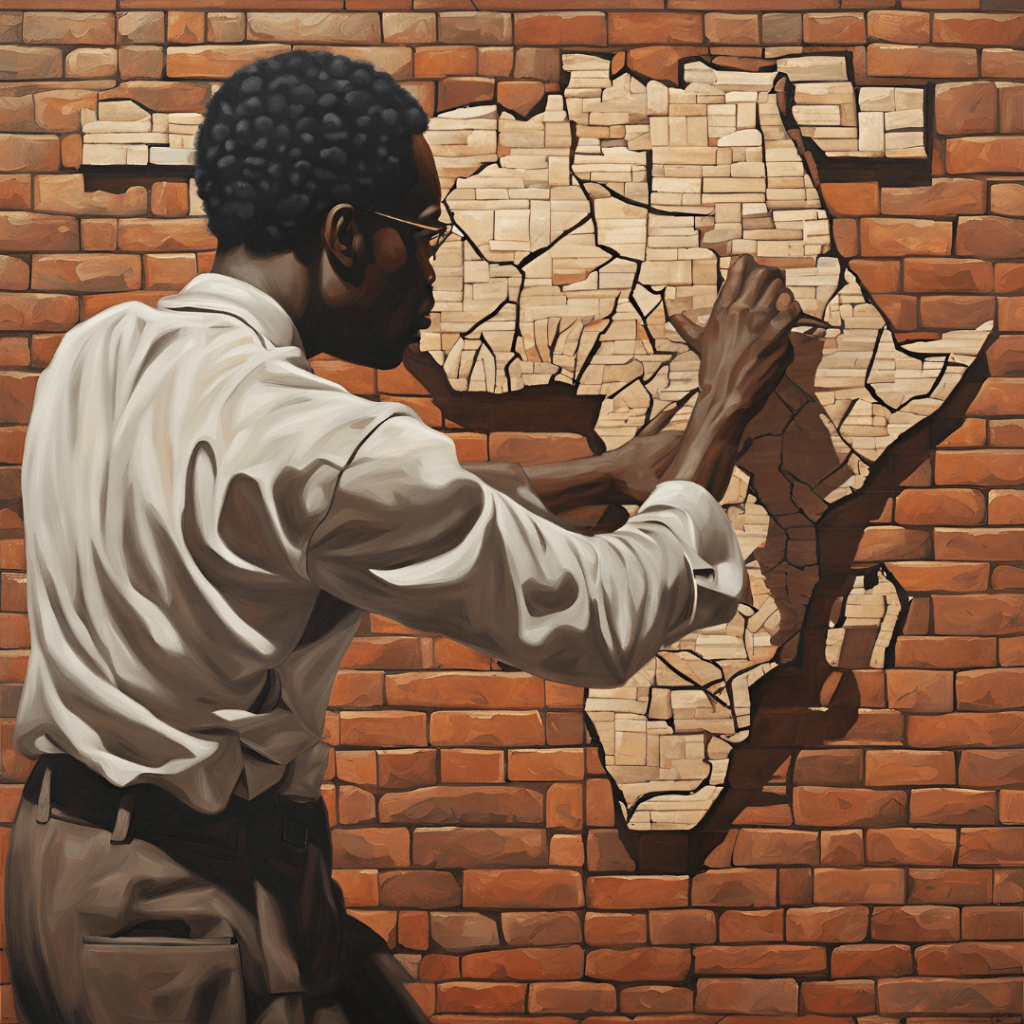
As we explore the profound influence of metaphors in shaping our understanding of gender, race, and beyond, it becomes evident that these linguistic tools are far from mere embellishments. Metaphors shape our perceptions of xenophobia, framing outsiders as “invaders” or “threats,” thus fueling divisive attitudes and impeding cross-cultural empathy. Similarly, in discussions about climate change, metaphors such as “the planet’s fever” or “a ticking time bomb” underscore the urgency and severity of environmental crises, yet they can also inadvertently evoke fear rather than fostering constructive dialogue and actionable solutions. These examples illustrate how metaphors not only reflect but also amplify our collective concerns and conflicts.
In the context of Africa, metaphors wield significant power, shaping both the continent’s narrative and its future trajectory. Phrases like “emerging markets” and “developing nations” can frame African countries as perpetually in a state of progress, yet they may also obscure the rich history and existing complexities of these societies. Conversely, metaphors portraying Africa as a “land of opportunity” or a “new frontier” can inspire investment and innovation, but they risk simplifying the diverse realities of its people. The way metaphors are employed in discussing Africa has the potential to influence perceptions globally, affecting policy, investment, and cultural exchange.
Ultimately, the metaphors we use are not just reflective of our world but instrumental in shaping it. By critically examining and revising our metaphorical language, we hold the power to reshape narratives and influence societal change. Whether addressing issues of race, gender, or environmental crises, or considering the implications for regions like Africa, a mindful approach to metaphors can either reinforce existing biases or pave the way for a more equitable and enlightened future. As we continue to navigate and redefine our world, let us remain aware of the metaphors we live by, understanding their profound impact on our collective consciousness and their potential to drive meaningful transformation.
 The San African