by teedzAI THAPELO
The winds of change have swept across Botswana. Following the historic October 30th, 2024, elections, Advocate Duma Boko has risen to the highest office, promising a transformative era for women’s rights and welfare.
His appointment of several accomplished young women to key positions signals not only a commitment to gender parity but a deeper reckoning with the structural inequalities that have long held women back in Botswana. Against the backdrop of the 2024 International Women’s Day theme, “Invest in Women: Accelerate Progress,” and the 16 Days of Activism Against Gender-Based Violence theme, “Towards Beijing+30: Unite to End Violence Against Women and Girls,” the moment calls for critical reflection on what this era might mean for women and society as a whole.
A Historic Cabinet and the Weight of Progress
President Boko’s appointments are historic.
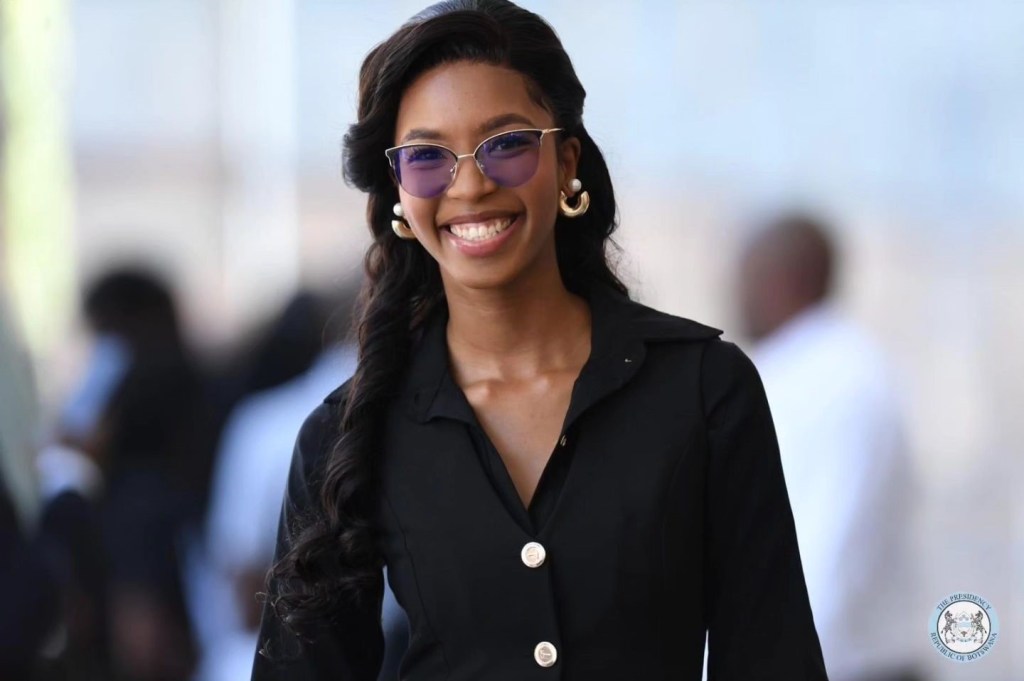
Lesego Chombo, a Miss World Africa titleholder and lawyer, now steers the Ministry of Youth and Gender Affairs, embodying a fusion of advocacy, intellect, and representation. Economist Bogolo Kenewendo’s leadership in the Ministry of Minerals and Energy positions women at the forefront of Botswana’s economic future. Emang Bokhutlo-Mutapati’s advocacy for press freedom and ethical journalism takes centre stage as she becomes Press Secretary to the President, amplifying women’s voices in public discourse.
Together, this team brings diverse perspectives to government, signalling a shift towards inclusivity under the leadership of Botswana post-independence children; a new intellectual generation that is youth-centred, tech savvy, worldly, cosmopolitan, and conscious of the fate and destiny of the nation in the turbulent era of the 21st century, an informed, articulate and analytical generation poised to amplify women’s voices at home and in global agenda debates and decisions.
For decades, women in Botswana have faced systemic barriers, from discriminatory customary laws to limited access to leadership opportunities in political parties, government and commercial industry. While Botswana’s Constitution guarantees equality before the law, cultural norms and practices have often undermined these rights. By placing women in pivotal roles, the new administration is poised to dismantle these barriers and inspire a generation of girls to envision a different future.
Cultural Tensions of Gender Progress
The appointment of young gender advocacy women leaders in a patriarchal society challenges deep-seated cultural norms. In rural Botswana, where customary law often prevails, women’s roles still yearn for advancement beyond the customary recognition of a few women as chiefs. Male-dominated institutions like the kgotla—a communal decision-making forum—have historically sidelined women, especially in marriage matters and inheritance disputes.
President Boko’s administration must navigate this terrain delicately, balancing progress with respect for cultural heritage.
The inclusion of women like Nono Kgafela-Mokoka as Minister of Child Welfare and Basic Education offers hope for addressing these cultural tensions. By investing in gender-sensitive education, the government can empower young girls while engaging communities in dialogue about the evolving roles of women. Education reforms must include curricula that challenge stereotypes and teach boys and girls alike the value of equality, creating a foundation for cultural transformation.
Economic Empowerment: The Key to Independence
The appointment of women to economic portfolios underscores a commitment to addressing the economic disparities that perpetuate gender inequality.
In Botswana, women are disproportionately represented in low-paying jobs, with limited access to capital. President Boko’s vow to implement his party’s human rights-based manifesto provides an opportunity to prioritize economic reforms that benefit women.
Bogolo Kenewendo’s leadership in the Ministry of Minerals and Energy is particularly significant. The mining sector, a cornerstone of Botswana’s economy, has long been dominated by men. By promoting policies that encourage women’s participation in this sector, the government can redefine economic empowerment.
Initiatives such as access to training programs, financing for women entrepreneurs, and quotas for women in leadership positions are crucial to ensuring that economic growth translates into gender equality.
Furthermore, the government’s emphasis on renewable energy, as recently articulated by Vice President and Finance Minister, Ndaba Gaolathe, provides an opportunity to engage women in sustainable development projects. Community-based solar and wind energy initiatives can create jobs for women while addressing energy poverty in rural areas. Economic empowerment is not just about income; it is about giving women the tools to participate fully in shaping their own lives and communities.
Fight Against Gender-Based Violence
Gender-based violence (GBV) remains one of the most pressing issues facing women in Botswana. The 2024 theme for the 16 Days of Activism, “Towards Beijing+30: Unite to End Violence Against Women and Girls,” highlights the urgency of addressing this crisis. Despite legislative progress, including the domestic violence acts and penal code amendment, implementation remains a challenge.
Many survivors lack access to justice due to stigma, fear, and inadequate support systems. Under President Boko’s leadership, the government has the opportunity to strengthen these frameworks.
Lesego Chombo’s role as Minister of Youth and Gender Affairs will be critical in ensuring that resources are allocated to combat GBV effectively. This includes funding for shelters, counselling services, and public awareness campaigns. The administration must also address the gaps in the criminal justice system, ensuring that perpetrators are held accountable and survivors receive the support they need.
The fight against GBV must also involve men and boys. Initiatives that engage men as allies in promoting gender equality can challenge harmful attitudes and behaviours. By fostering a culture of respect and accountability, Botswana can move closer to a society where women are free from violence and fear.
Constitutional Reform
Botswana’s legal framework has historically failed to fully protect women’s rights, particularly in areas where customary law intersects with statutory law. President Boko’s background as a human rights lawyer and constitutional scholar positions him uniquely to address these gaps. Constitutional reform must be prioritized to ensure that women’s rights are not subject to cultural exceptions.
Aspirations of Pan-African Feminism
President Boko’s administration arrives at a time when Pan-African feminism is gaining momentum across the continent. This movement calls for the decolonization of gender relations and the recognition of African women’s unique struggles and contributions. Botswana’s advancements can serve as a model for other nations, demonstrating the power of inclusive leadership.
Emang Bokhutlo-Mutapati’s appointment as Press Secretary to the President highlights the role of media in amplifying women’s voices and shaping public opinion. By promoting stories that celebrate women’s achievements and address their challenges, the media can play a transformative role in advancing gender equality. Pan-African feminism also emphasizes solidarity among women across borders, advocating for regional cooperation on issues such as GBV, maternal health, and economic inclusion, and in this administration we have women who are more than qualified to articulate and implement this vision.
Towards a Society of Equals
The road ahead is not without challenges. Achieving true gender equality requires not only political will but also a societal shift in attitudes and behaviours. Women’s advancement must be seen not as a threat to tradition but as an opportunity to build a more just and prosperous society.
As President Boko’s administration implements its human rights-based manifesto, it must prioritize the voices and needs of women, ensuring that progress is inclusive and sustainable.
The theme of International Women’s Day 2024, “Invest in Women: Accelerate Progress,” captures the essence of this moment. By investing strategically in education, healthcare, and economic opportunities for women, Botswana can unlock the full potential of half its population. This investment is not just about fairness; it is about building a society where everyone can thrive.
Beacon of Hope
The rise of young women leaders in President Boko’s administration represents more than a political milestone; it is a beacon of hope for all who believe in the dignity and potential of women. From the corridors of power to the classrooms of rural schools, this new era holds the promise of transformation.
Yet, the journey requires vigilance, advocacy, and unity. Botswana stands at the threshold of history, with an opportunity to lead by example in the fight for gender equality.
As the world watches, the nation must seize this moment to honour its women, not just with words but with action.
The vision of a Botswana where every woman and girl can live free from violence, inequality, and fear is within reach.
It is a vision that will require courage, commitment, and the unwavering belief that progress for women, is progress for all.
 The San African